Children’s Book Bullying: How Stories Help Kids Learn Kindness, Empathy, and Respect
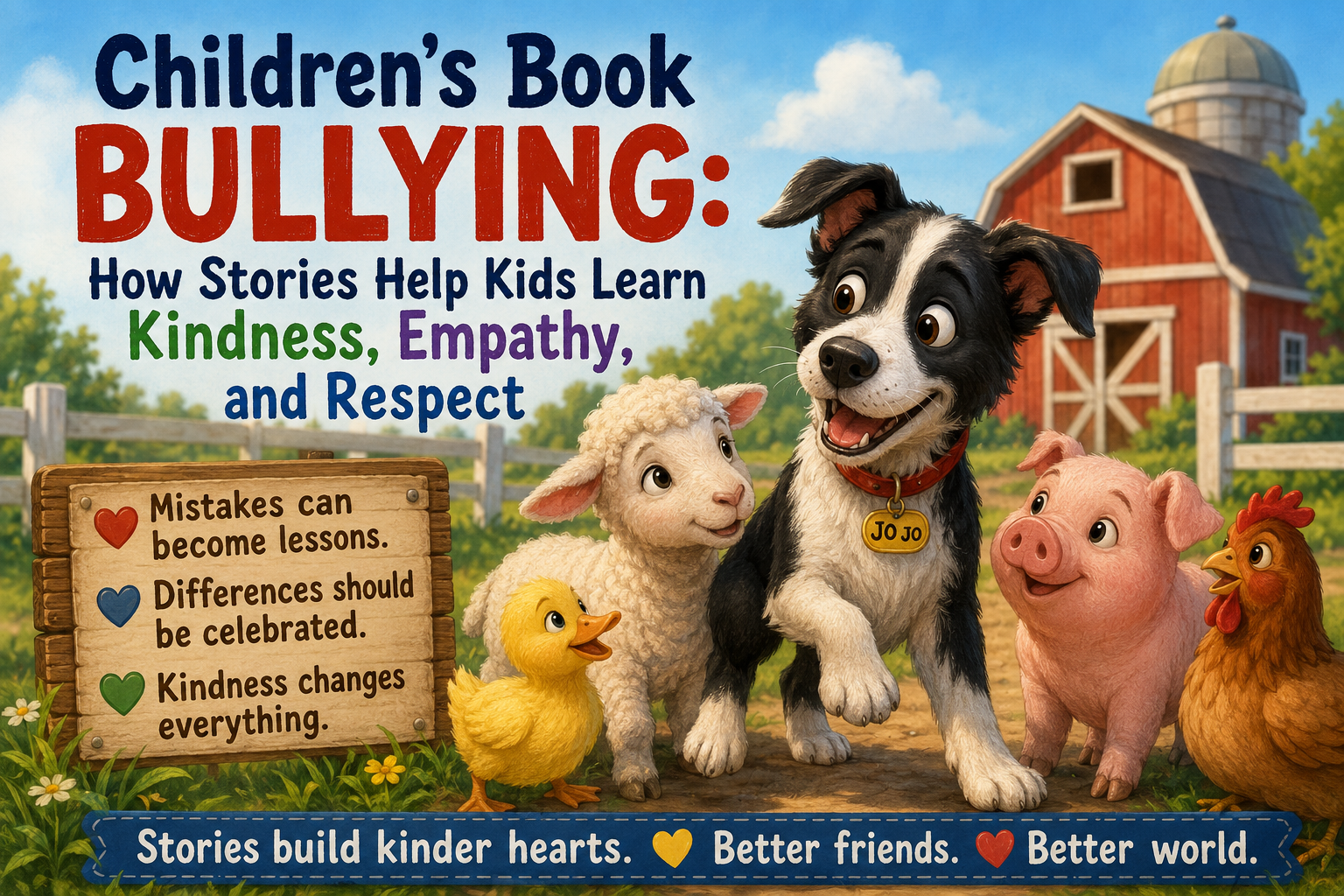
Children learn some of life’s biggest lessons through the simplest moments — a bedtime story, a favorite character, or a conversation after turning the final page. Long before children understand complex ideas like empathy, responsibility, and respect, they begin learning from the stories they hear.
A meaningful children’s book about bullying does more than show a character being unkind. It helps children understand why actions matter, how others feel, and how they can choose kindness instead.
Bullying is not always easy for children to recognize. Sometimes a child hurts another child intentionally, but other times hurt happens because someone is careless, overly excited, unaware of another person’s feelings, or does not understand the impact of their actions.
This is why stories are such powerful teaching tools.
In The Crooked Dog Goes to a Farm, Jo Jo is not a mean dog. He is a loving, excited dog who wants to make friends. However, his excitement causes him to accidentally knock over smaller animals at the farm. Through these experiences, Jo Jo learns that being bigger, stronger, or more energetic means he has a responsibility to be gentle with others. Jo Jo’s journey shows children an important lesson: mistakes can become opportunities to learn, grow, and become a better friend.
Why Children Need Stories That Teach More Than Just Reading Skills
Children’s books do much more than build vocabulary and reading confidence. The best stories help children understand emotions, relationships, and the world around them.
Characters in books become examples children can relate to. A child may not immediately understand what it feels like to be left out, misunderstood, or treated differently, but they can understand when a favorite character experiences those feelings.
This is why many parents and educators look for books about bullying for kids and stories that support emotional growth. These books give children a safe way to explore difficult situations before they experience them personally.
Stories also create opportunities for meaningful conversations between children and adults. A parent reading with a child can ask questions, discuss choices, and help children connect the story to real-life situations.
Jo Jo’s story begins with a dog who is scared, alone, and searching for a place where he belongs. His unusual appearance makes him different, but his differences do not make him less deserving of love. Instead, his journey reminds children that every individual has value and deserves acceptance.
When children see characters who overcome challenges and find friendship, they begin to understand that kindness starts with seeing the worth in others.
How The Crooked Dog Teaches Children That Differences Should Be Celebrated
Children naturally notice differences. They notice how people look, how they move, what they enjoy, and how they behave. The important lesson is not teaching children to ignore differences — it is teaching them to appreciate them.
Jo Jo is called “The Crooked Dog” because of his unique appearance. His crooked walk is part of what makes him special, but it is not the thing that defines him.
Throughout the story, children see that Jo Jo is playful, loving, curious, and capable of forming friendships. His differences do not prevent him from being accepted.
This message is especially important for young readers because many children experience moments when they feel different from others. They may have a different personality, appearance, ability, background, or way of learning.
Children’s books about kindness help children understand that being different is not something to criticize. Instead, differences are part of what makes every person and animal unique.
Jo Jo’s experience teaches a simple but powerful idea: everyone deserves patience, care, and friendship — whether they look different, act differently, or need extra support.
Learning the Difference Between Mistakes and Bullying
One of the most important lessons children can learn is that not every hurtful action comes from a bad heart.
Young children are still developing self-control, awareness, and emotional understanding. They may become too excited during play, move too quickly, or fail to recognize that someone else is uncomfortable.
The difference comes from what happens next.
Do they understand the impact of their actions?
Do they apologize?
Do they try to make better choices?
In The Crooked Dog Goes to a Farm, Jo Jo wants to meet every animal he sees. He runs toward a lamb, a duckling, a pig, and other farm animals because he is excited to make new friends. However, his excitement causes him to knock them over and hurt their feelings.
Kelly helps Jo Jo understand that being larger and stronger means he must be more careful around smaller animals. Instead of labeling Jo Jo as a “bad dog,” Kelly teaches him responsibility and awareness.
This is an important lesson for children. A mistake does not have to define someone. Learning from mistakes is how children develop empathy and become better friends.
Teaching Empathy Through Animal Stories
Animal stories have always been powerful teaching tools because children often connect deeply with animals. A child may recognize emotions in a puppy, kitten, or farm animal before they can fully explain those emotions in people.
This makes animal stories valuable books that teach empathy.
Through Jo Jo’s experiences, children learn several important social skills:
- Understanding how another person or animal feels
- Recognizing when someone has been hurt
- Saying sorry when they make a mistake
- Changing behavior after learning a lesson
- Becoming a more thoughtful friend
Empathy is not something children learn from one conversation. It develops through repeated experiences, examples, and discussions.
Stories give children a chance to practice empathy in their imagination. When a child feels sad because a character is lonely or hurt, they begin developing emotional awareness that carries into real relationships.
This is why social emotional learning books for children are becoming an important resource for families and classrooms. They help children explore feelings, friendships, problem-solving, and kindness in ways that feel natural and engaging.
Questions Parents Can Ask After Reading a Bullying-Themed Children’s Book
Reading together creates an opportunity to talk about kindness and choices. After finishing a story like The Crooked Dog Goes to a Farm, parents and caregivers can ask questions that encourage children to think deeper.
Some helpful discussion questions include:
- How do you think the lamb felt when Jo Jo knocked him down?
- What could Jo Jo have done differently when he wanted to meet the animals?
- Why is being gentle important when we play with others?
- How do you think Jo Jo felt when he realized he hurt someone?
- Why do you think Kelly helped Jo Jo instead of giving up on him?
- How can we help someone who feels different or left out?
- Have you ever made a mistake and learned something important from it?
These conversations help children move beyond simply hearing a story. They help children apply the lesson to their own lives.
Conclusion
A meaningful children’s book does more than entertain — it helps children practice kindness before they face real-life situations.
Stories about acceptance, empathy, and understanding give children the tools they need to build healthier friendships and treat others with care. A character like Jo Jo shows young readers that being different is something to celebrate, mistakes can become lessons, and everyone deserves love and patience. Through gentle storytelling, children discover that kindness is not just something we say — it is something we practice every day.