Dachshund Story Books: Why Jo Jo’s Journey Is a Heartwarming Tale for Dog-Loving Families
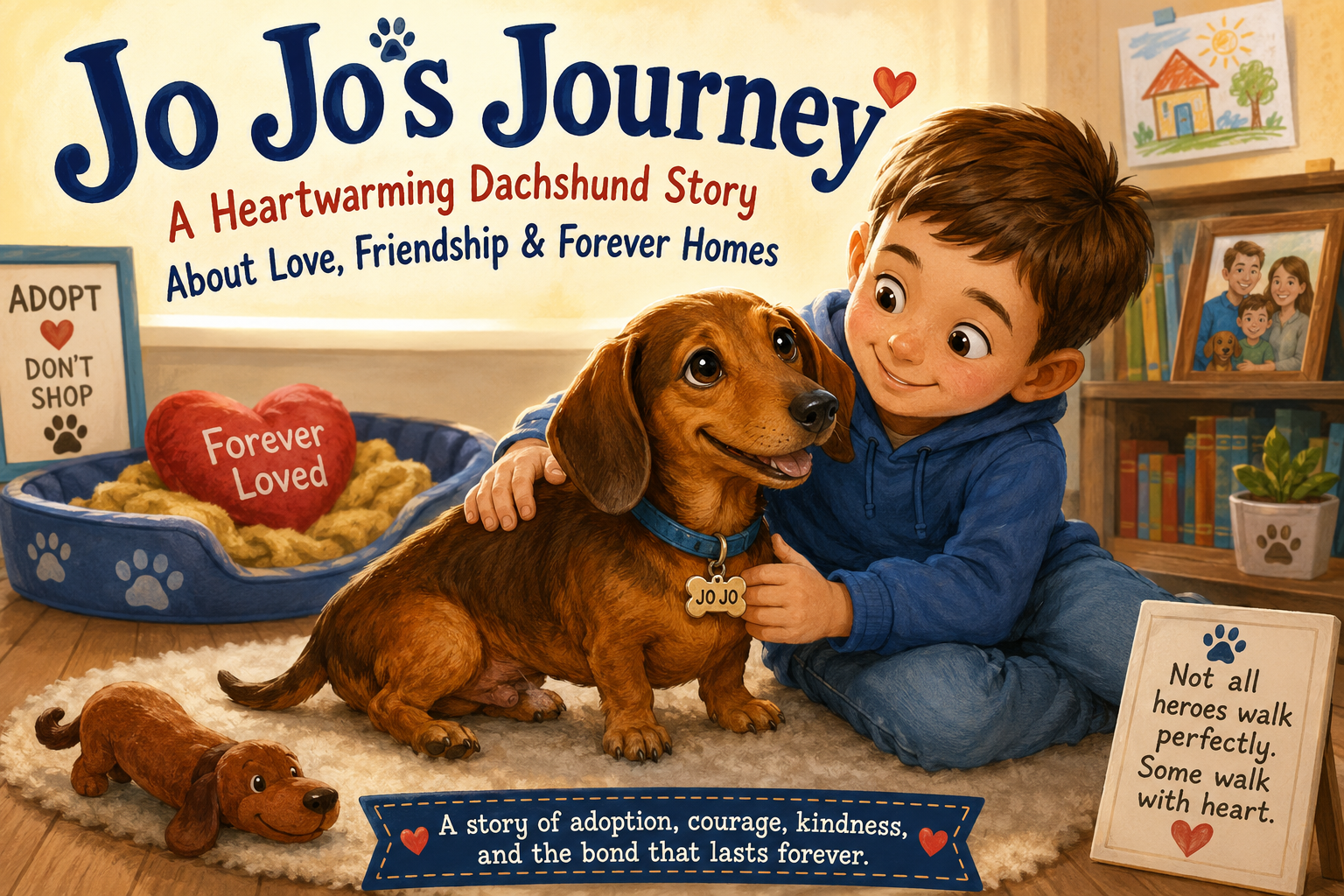
Dachshunds are hard to forget. Their long bodies, short legs, curious expressions, and determined personalities make them natural stars of children’s stories. They can be playful one moment, stubborn the next, and completely devoted to the people they love.
For children, those qualities make a Dachshund more than a funny-looking dog. They create a character who feels lively, relatable, and full of heart.
That is why dachshund story books appeal to so many parents, grandparents, teachers, and young readers. Children are drawn to the breed’s unusual appearance, while adults appreciate stories that use a lovable animal character to introduce meaningful lessons.
Jo Jo, the central character in Joanne Stubenberg’s The Crooked Dog series, offers both. He is sweet, frightened, playful, brave, and a little different. His journey helps children understand adoption, friendship, responsibility, patience, and the lasting bond between a pet and a family.
Jo Jo’s story is also deeply personal. He was inspired by a rescued Dachshund who became part of Joanne’s own family. Through his experiences, young readers see that a difficult beginning does not have to determine the rest of someone’s life. With kindness and care, a frightened animal can become a beloved companion.
Meet Jo Jo: The Dachshund Who Found His Forever Home
At the beginning of Jo Jo’s story, he does not have a home. He is lost, frightened, and alone. He does not know where he belongs or whether anyone will stop to help him.
Then a kind man named Bill finds him.
Bill’s decision to rescue Jo Jo changes everything. Jo Jo is taken somewhere safe, where he stays with other dogs who are also waiting to be adopted. The story gently introduces children to the idea that many animals need homes and that rescue organizations provide care while those animals wait for families.
Eventually, a young boy named Kelly meets Jo Jo. Kelly sees more than a dog with an unusual shape. He sees a possible friend. He asks his parents whether their family can adopt Jo Jo, and they agree.
Jo Jo finally has what he has been missing: a home, a family, and someone who loves him.
The manuscript presents this emotional transition in a way young children can easily understand. Jo Jo moves from being lost and scared to being safe, adopted, and loved by Kelly.
Dachshund story books often create memorable characters because children connect with animals who overcome challenges. Jo Jo’s journey gives young readers a clear emotional path to follow. They can recognize his fear, feel relief when Bill rescues him, and celebrate when Kelly welcomes him home.
Among dachshund books for kids, Jo Jo’s story stands out because the adoption is not treated as the end of the journey. It is the beginning of a relationship that requires love, effort, and responsibility.
Why Families Love Dog Stories With Messages About Adoption
Pet adoption stories give families a natural way to talk about compassion. Instead of presenting rescue as an abstract issue, a story allows children to experience it through one character.
Jo Jo is not simply “a rescue dog.” He is a dog with feelings. He is afraid when he is alone. He feels safe when someone helps him. He becomes happy when he realizes he has found a family.
That emotional clarity is one reason rescue dog stories for kids can be so meaningful. They help children understand that animals depend on people for protection, food, medical attention, exercise, and companionship.
Joanne’s message is especially important: pets are family members, not temporary companions.
Adopting a dog involves much more than choosing a cute animal. A family must be prepared to care for that pet through changes, challenges, aging, and illness. Children may not yet understand every responsibility involved, but Jo Jo’s story gives them a strong starting point.
Kelly does not love Jo Jo only when they are playing. He continues to care for him when Jo Jo is hurt and needs extra attention. That part of the story shows what commitment looks like in everyday life.
For parents, the book can begin conversations such as:
What does a dog need every day? How should we treat an animal that feels frightened? What happens when a pet becomes sick or injured? Why should adopting an animal be a family decision?
These questions help children move beyond wanting a pet toward understanding how to care for one.
What Makes Jo Jo Different From Other Dog Characters?
Jo Jo’s appearance is part of his charm. Like other Dachshunds, he has a long body that some people compare to a hot dog. Later, after injuring his back, he no longer walks exactly as he did before. He becomes a little crooked.
But being crooked does not make Jo Jo less lovable.
It makes him Jo Jo.
Many children’s books about dogs feature brave, funny, or adventurous animals. Jo Jo brings another valuable quality to the genre: visible difference. His shape and movement help children recognize that a character does not have to look or move like everyone else to be worthy of friendship.
This lesson reaches beyond pets.
Children regularly encounter differences in appearance, ability, personality, background, and communication. A gentle story can help them approach those differences with curiosity and kindness rather than judgment.
Jo Jo does not need to become “perfect” before he can enjoy his family. His life continues. He plays, explores, receives care, and shares a close bond with Kelly. His difference becomes part of his identity rather than something that removes him from the story.
That perspective makes The Crooked Dog more than a pet adoption book. It is a celebration of acceptance.
Lessons About Friendship From a Dachshund Adventure
Jo Jo and Kelly quickly become best friends. Their friendship begins with excitement and play, but it grows stronger when life becomes difficult.
During a strong wind, a large tree branch falls and injures Jo Jo’s back. Kelly is frightened and worried. A veterinarian explains that Jo Jo must rest and avoid walking while he recovers.
For Kelly, caring for his friend now requires patience.
He must bring Jo Jo food and water because Jo Jo cannot get them himself. He must follow the veterinarian’s directions, even when resting may not be what Jo Jo wants to do. He must place his friend’s health above immediate fun.
This is one of the story’s strongest lessons.
Children often understand friendship through shared activities: playing games, laughing, running outside, or exploring together. Jo Jo and Kelly show that friendship also means staying close when someone cannot play.
Caring can be quiet.
It can mean waiting. Helping. Listening. Bringing what someone needs. Following instructions. Remaining loyal during an uncomfortable or uncertain time.
Jo Jo’s recovery makes responsibility visible in a child-friendly way. Kelly is not asked to solve everything. He simply does the caring tasks that are within his ability. That encourages young readers to recognize that even small actions can make another person or animal feel safe.
This emotional honesty gives the book lasting value among dog story books for children. The story does not avoid difficulty, but it presents the challenge in a reassuring way. Jo Jo is injured, cared for, and still deeply loved.
A Dog Story That Helps Children Learn Gentle Play
Jo Jo is naturally curious. He enjoys playing, exploring, and discovering what is happening around him. Those qualities make him entertaining, but they can also lead to important lessons.
In the next part of his journey, Jo Jo explores life on a farm. He is excited by the animals, movement, and new surroundings. Like many energetic children and pets, he may become so enthusiastic that he does not immediately recognize when his play is too rough or overwhelming.
This creates an opportunity to teach gentle play.
Kindness is not only about having good intentions. It also means noticing how our actions affect someone else. A child may be excited to hold a small animal, hug a younger sibling, or play with a smaller friend. However, excitement must be balanced with care.
Jo Jo’s experiences help children think about size, strength, personal space, and vulnerability. A smaller animal may become frightened even when a larger friend is only trying to play. Learning to slow down, observe, and respond gently is part of developing empathy.
Parents and teachers can use the story to reinforce several practical habits:
Ask before touching an unfamiliar pet. Approach animals calmly. Avoid pulling ears or tails. Give an animal space while it is eating or resting. Stop playing when a pet appears frightened, tired, or uncomfortable.
These lessons are useful whether a child lives with pets, visits relatives who own animals, or encounters dogs in the community.
Why Jo Jo’s Story Belongs in a Family Reading Collection
The strongest animal stories entertain children while giving families something meaningful to discuss afterward. Jo Jo’s journey creates that balance.
Young readers meet a funny, long-bodied dog with an expressive personality. They follow him through fear, rescue, adoption, friendship, injury, recovery, and new adventures. At every stage, the story returns to the same central truth: love is demonstrated through care.
Joanne Stubenberg brings authenticity to that message because Jo Jo was inspired by a real rescue dog. Her experience as a lifelong Dachshund owner, grandmother, author, and illustrator gives the series a personal warmth that cannot be manufactured.
Her illustrations also support the emotional simplicity of the story. The characters’ expressions make fear, happiness, worry, and affection easy for young children to identify. That visual clarity can be especially valuable for early readers and read-aloud audiences.
For families searching for dachshund story books, Jo Jo offers more than a familiar breed. He gives children a character they can care about and lessons they can carry into their own relationships. The best dachshund stories are not only about dogs — they are about friendship, compassion, responsibility, and the love between families and their pets. Through Jo Jo’s journey, children are reminded that being different is something to celebrate and that every animal deserves the chance to feel safe, valued, and forever loved.